 ultimate-guide
Small Construction Business Insurance Requirements
Table of Contents
- Types of Construction Insurance Coverage Your Business Needs
- State-Specific Insurance Mandates and Compliance
- Certificate of Insurance and Contractual Liability
- Getting a Contractor Insurance Quote Online
- Factors That Influence Your Insurance Costs
- Managing Claims and Coverage Gaps
- Frequently Asked Questions
Last Updated: August 29, 2026
Types of Construction Insurance Coverage Your Business Needs
Construction business insurance protects your financial legacy. Without the right coverage, a single job site injury, property damage claim, or lawsuit could bankrupt a small operation. At Fadaie Insurance Services, Inc., we help contractors identify coverage gaps that expose them to catastrophic risk.
Your insurance needs change with every project. A residential framing crew faces different risks than a commercial demolition team. A solo electrician's needs differ from a five-person concrete company. This section breaks down core coverage types every construction business should evaluate.
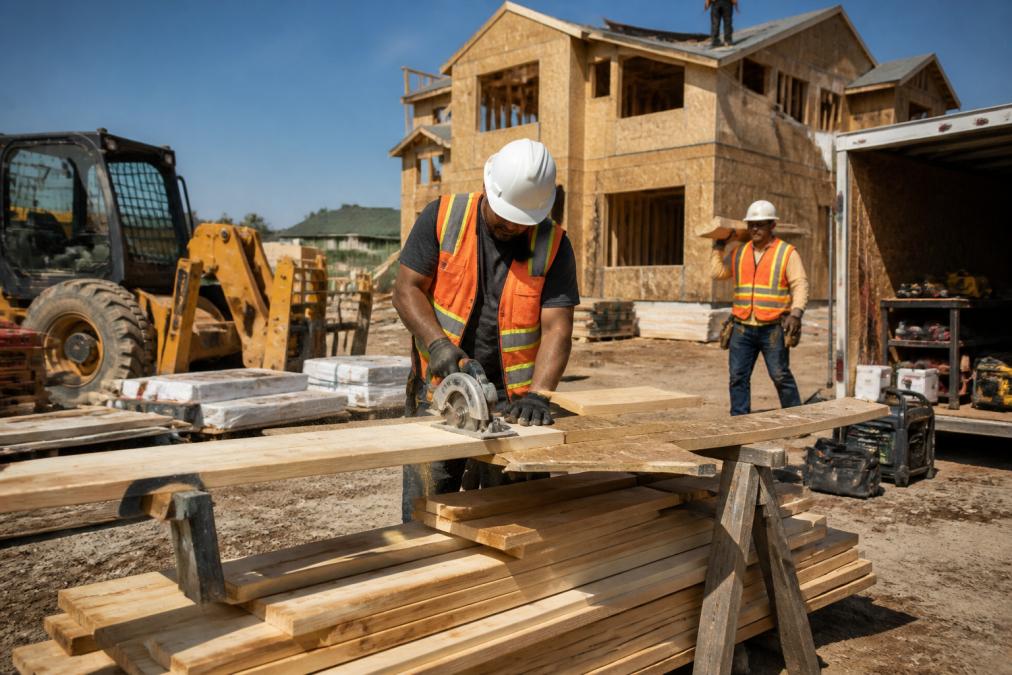
General Liability Insurance for Contractors
General liability insurance for contractors is the foundation of any construction business insurance program. It covers bodily injury, property damage, and personal injury claims arising from your business operations. If a client's property is damaged during your work or a bystander is injured on your job site, general liability covers legal defense costs and settlement expenses.
Most general contractors require subcontractors to carry general liability before starting work, and many commercial projects won't let you bid without it. Policy limits matter significantly; a $1 million limit may be adequate for small residential jobs but dangerously low for large commercial projects.
Workers' Compensation Requirements for Construction
Workers' compensation requirements for construction vary by state but are legally mandated in most jurisdictions if you have employees. Workers' compensation covers medical expenses and lost wages for employees injured on the job and protects you from lawsuits because employees generally waive their right to sue in exchange for coverage.
Cost is calculated based on payroll and industry classification. Construction is classified as high-risk, resulting in higher rates than office-based businesses. Your safety record directly affects premiums, claims history increases costs, while strong safety practices can lower rates.
Commercial Auto and Equipment Coverage
Construction vehicles and equipment represent significant capital investment. Commercial auto insurance covers vehicles used for business purposes, including owned, hired, and non-owned vehicles. Standard personal auto policies explicitly exclude business use.
Equipment coverage (inland marine or equipment floater) protects tools, machinery, and specialized equipment against theft, damage, and loss. For contractors with significant equipment investment, this is essential.
Builders Risk and Property Insurance
Builders risk insurance is specifically designed for construction projects. It covers materials, equipment, and structures under construction against fire, theft, vandalism, and weather damage. If a storm damages framing before the roof is on, or materials are stolen from the job site, builders risk covers the loss.
Builders risk is project-specific and temporary, expiring when construction is complete. For contractors, builders risk is often required by the property owner or lender.
State-Specific Insurance Mandates and Compliance
Insurance and licensing requirements for construction businesses vary dramatically by state and trade. Understanding your specific state and trade requirements is non-negotiable, getting it wrong can result in license suspension, contract penalties, or uninsured liability exposure.
Workers' Compensation Mandates by State
Most states require workers' compensation insurance if you have employees, but thresholds and exemptions differ (dol.gov). Some mandate coverage for any business with one or more employees; others allow sole proprietors without employees to opt out. New Jersey, New York, and Texas operate state-administered programs alongside private insurers.
New York requires workers' compensation through a private insurer, self-insurance program, or state assigned risk pool. Texas doesn't mandate it for most private employers but requires approved carriers if you choose coverage. California mandates it for virtually all employers, including sole proprietors with employees.
Cost structure varies by state. Most calculate premiums as a percentage of payroll based on industry classification code. Construction trades are assigned high-hazard codes. Your experience modification rate (EMR), based on claims history, can increase or decrease your base rate by 10-50% or more.
Contractor Licensing and Insurance Proof Requirements
Many states require contractors to be licensed, with licensing boards often mandating proof of insurance as a condition of licensure. California's Contractors State License Board requires general contractors to maintain workers' compensation insurance. Florida's Department of Business and Professional Regulation requires licensed contractors to maintain workers' compensation if they have employees.
Specific coverage limits required by licensing boards vary. Some states specify minimum general liability limits ($300,000 to $1 million), while others leave it to industry standards or contractual requirements. Contact your state's licensing board and local building department to confirm exact requirements before bidding on work.
Public Works and Prevailing Wage Compliance
Public works projects (government-funded construction) trigger additional insurance and compliance requirements. Federal projects funded through the Davis-Bacon Act require contractors to pay prevailing wages and often mandate specific insurance coverage (dol.gov). These projects typically require higher general liability limits, workers' compensation proof, and sometimes performance and payment bonds.
Public works projects also require certified payroll records and documentation of insurance coverage throughout the project.
Contractual Insurance Requirements
Beyond state mandates, clients and general contractors impose their own insurance requirements in contracts. A commercial property owner might require $2 million in general liability and name them as an additional insured. If your state requires $1 million in general liability but your client's contract requires $2 million, you must carry $2 million. Review every contract carefully before signing and confirm your insurance meets those requirements.
Staying Current on Compliance
State regulations and licensing requirements change periodically. Verify requirements annually with your state's licensing board, local building department, and insurance advisor. If you operate in multiple states, you may need different coverage levels in each jurisdiction. Document your compliance efforts, keep copies of certificates of insurance, policy declarations pages, and correspondence with your state licensing board.
Certificate of Insurance and Contractual Liability
A certificate of insurance proves you have active coverage. It lists your policy numbers, coverage limits, and the insurance company's contact information. Clients, general contractors, and project owners request it regularly. Always keep certificates current and provide them promptly when requested.
Contractual liability protects you when you assume liability under a contract. For example, if a contract requires you to indemnify the property owner for injuries on the job site, contractual liability coverage applies. Most general liability policies include contractual liability, but confirming this with your insurer is essential.
Getting a Contractor Insurance Quote Online
Obtaining a construction business insurance quote online is straightforward. Online quote tools ask about your business structure, types of work, payroll, and claims history. These details directly affect your premium.

Be specific about your work. "General contracting" is vague; "residential framing and drywall installation" is precise. Online quotes provide a starting point, but they don't account for nuances like prior claims, safety certifications, or specific large contracts requiring additional coverage. Fadaie Insurance Services, Inc. goes beyond online quotes by understanding your specific operation and identifying coverage gaps that generic tools miss. safety consulting services.
Factors That Influence Your Insurance Costs
Several variables directly affect construction business insurance costs. Your payroll is one of the largest drivers, workers' compensation is calculated as a percentage of payroll. Your industry classification (electrician, carpenter, general contractor, demolition specialist) carries different risk ratings.
Your claims history matters significantly. Contractors with no prior claims pay less than those with injury or property damage history. Safety practices, certifications, and training programs can lower rates. High-risk activities like working at height or in confined spaces command higher premiums. Your location and the types of projects you perform also affect cost.
Managing Claims and Coverage Gaps
A job site incident, injury, property damage, or third-party claim, creates a critical window where your actions directly affect whether your insurance covers the loss.
The First 24 Hours: Immediate Actions After an Incident
1. Secure the scene and provide immediate care. If someone is injured, call 911 if medical attention is needed. Secure the area to prevent further injury or damage. Take photos of the scene, equipment involved, and visible hazards before cleanup or repairs begin.
2. Notify your insurance company within 24 hours. Most policies require prompt notice of a potential claim. When you call, provide basic facts: what happened, who was involved, when it occurred, and what damage or injury resulted. Do not speculate about fault or liability.
3. Document everything in writing. Write down incident details while fresh: date, time, location, weather conditions, who was present, what equipment was in use, and what happened. Interview witnesses and collect their contact information. Take detailed photos and video of the scene, damage, and visible hazards.
4. Preserve evidence. Do not repair or remove damaged equipment or materials until your insurer inspects them. Do not alter the job site beyond what's necessary for safety.
5. Notify relevant parties. If the incident involves a client's property, notify them immediately. If a third party was involved, document their information. Notify your workers' compensation insurer separately if applicable.
The Claims Process: What Happens Next
After you notify your insurer, an adjuster is assigned to investigate. The adjuster will contact you for additional information, review your documentation, and determine whether the claim is covered. Cooperate fully with the investigation, your policy typically requires it, and non-cooperation can result in claim denial. If covered, your insurer either settles the claim or defends you in court. If the claim exceeds your policy limits, you may be personally liable for the excess.
Common Coverage Gaps and How to Avoid Them
Inadequate liability limits. You carry $1 million in general liability, but a claim exceeds that limit. Umbrella insurance (additional liability coverage) is inexpensive relative to the protection it provides.
Missing contractual liability coverage. A contract requires you to indemnify the property owner for injuries on the job site. Most general liability policies include contractual liability, but confirming this is essential.
Exclusions for certain work types. Your general liability policy may exclude coverage for specific high-risk activities like work at heights or in confined spaces. Review your policy's exclusions carefully.
No professional liability coverage. If you provide design advice, consulting services, or specifications to clients, you may face claims that your advice caused financial loss. General liability doesn't cover this; you need professional liability (errors and omissions) insurance.
Equipment coverage gaps. High-value equipment may not be adequately covered under your general liability policy. Inland marine or equipment floater policies are designed for this.
Workers' compensation exclusions. If you misclassify someone as an independent contractor when they should be an employee, you have no workers' compensation coverage for them. Confirm the classification of everyone on your payroll with your insurer.
Identifying and Closing Gaps Before Claims Arise
Review your contracts before bidding on projects. Does the contract require higher limits than you carry? Identify these requirements upfront and adjust your coverage before signing.
Discuss your work with your insurer. Describe the types of projects you take on, trades you perform, equipment you use, and any specialized or high-risk activities. Ask specifically about exclusions and what work might not be covered.
Consider umbrella insurance. For a modest premium, umbrella insurance provides additional liability coverage above your primary policies.
Document your safety practices. Contractors with strong safety records pay lower premiums and have fewer claims. Implement documented safety protocols, provide training to your crew, maintain equipment properly, and keep records of safety inspections.
Review annually. As your business grows, your coverage needs change. Schedule an annual review with your insurance advisor to ensure your coverage still matches your actual operations.
=== FAQ ANSWERS (audit these too, same rules) ===
[1] Q: What type of insurance does a small construction company need? A: Most small construction businesses require general liability insurance to cover property damage and third-party bodily injury claims. Workers' compensation is mandatory in nearly all states if you have employees. Commercial auto insurance covers business vehicles, and builders risk protects materials and equipment on job sites. Many contractors also carry professional liability and umbrella insurance for additional protection. The specific coverage depends on your trade, number of employees, and the types of projects you undertake.
[2] Q: Is general liability insurance mandatory for contractors? A: General liability insurance is not federally mandated, but most clients, including property owners, general contractors, and municipalities, require proof of coverage before hiring you. Many states also require it as a condition of obtaining a contractor license. Additionally, surety bonds and permit requirements often stipulate that you maintain active general liability coverage. It's considered essential rather than optional for any contractor operating professionally.
[3] Q: How do I get a contractor insurance quote online? A: Most independent insurance agencies, including Fadaie Insurance Services, offer online quote tools where you enter business details: number of employees, annual revenue, types of work, and past claims history. You'll also specify desired policy limits and deductibles. After submission, licensed advisors review your information and provide customized quotes. Online quotes save time and let you compare coverage options before committing. Contact us today to request your contractor insurance quote online.
[4] Q: What does workers' compensation insurance cover for construction employees? A: Workers' compensation covers medical expenses, rehabilitation costs, and lost wages for employees injured on the job (the CDC). It also provides death benefits to families if a workplace injury is fatal. In construction, coverage typically includes occupational hazards like falls, equipment injuries, and repetitive strain. This insurance is mandatory in nearly all states once you hire your first employee, and it protects both your workers and your business from costly lawsuits related to job site injuries.
[5] Q: What is a Certificate of Insurance and why do clients ask for it? A: A Certificate of Insurance (COI) is a document that proves your business maintains active liability and workers' compensation coverage. It shows policy limits, coverage types, and expiration dates. Clients request COIs before awarding contracts to verify you have adequate indemnity protection and that they're protected if your work causes damage or injury. Many contractors are asked to provide COIs during the bidding process. It's a standard compliance requirement in the construction industry.
[6] Q: How do insurance costs differ for specialized trades? A: Insurance premiums vary significantly by trade. High-risk trades like roofing and electrical work typically pay more than carpentry or painting because they carry greater occupational hazards and claim history. Underwriting considers the nature of work, equipment used, job site injury frequency, and regulatory requirements specific to each trade. An independent insurance advisor can assess your specific trade classification and help identify cost-saving opportunities while ensuring adequate coverage for your particular occupational hazards.
Frequently Asked Questions
What type of insurance does a small construction company need?
Most small construction businesses require general liability insurance to cover property damage and third-party bodily injury claims. Workers' compensation is mandatory in nearly all states if you have employees. Commercial auto insurance covers business vehicles, and builders risk protects materials and equipment on job sites. Many contractors also carry professional liability and umbrella insurance for additional protection. The specific coverage depends on your trade, number of employees, and the types of projects you undertake.
Is general liability insurance mandatory for contractors?
General liability insurance is not federally mandated, but most clients, including property owners, general contractors, and municipalities, require proof of coverage before hiring you. Many states also require it as a condition of obtaining a contractor license. Additionally, surety bonds and permit requirements often stipulate that you maintain active general liability coverage. It's considered essential rather than optional for any contractor operating professionally.
How do I get a contractor insurance quote online?
Most independent insurance agencies, including Fadaie Insurance Services, offer online quote tools where you enter business details: number of employees, annual revenue, types of work, and past claims history. You'll also specify desired policy limits and deductibles. After submission, licensed advisors review your information and provide customized quotes. Online quotes save time and let you compare coverage options before committing. Contact us today to request your contractor insurance quote online.
What does workers' compensation insurance cover for construction employees?
Workers' compensation covers medical expenses, rehabilitation costs, and lost wages for employees injured on the job. It also provides death benefits to families if a workplace injury is fatal. In construction, coverage typically includes occupational hazards like falls, equipment injuries, and repetitive strain. This insurance is mandatory in nearly all states once you hire your first employee, and it protects both your workers and your business from costly lawsuits related to job site injuries.
What is a Certificate of Insurance and why do clients ask for it?
A Certificate of Insurance (COI) is a document that proves your business maintains active liability and workers' compensation coverage. It shows policy limits, coverage types, and expiration dates. Clients request COIs before awarding contracts to verify you have adequate indemnity protection and that they're protected if your work causes damage or injury. Many contractors are asked to provide COIs during the bidding process. It's a standard compliance requirement in the construction industry.
How do insurance costs differ for specialized trades?
Insurance premiums vary significantly by trade. High-risk trades like roofing and electrical work typically pay more than carpentry or painting because they carry greater occupational hazards and claim history. Underwriting considers the nature of work, equipment used, job site injury frequency, and regulatory requirements specific to each trade. An independent insurance advisor can assess your specific trade classification and help identify cost-saving opportunities while ensuring adequate coverage for your particular occupational hazards.
This article was written using GrandRanker