 ultimate-guide
Flexible and Secure Insurance for Property Development
Table of Contents
- Why Flexible and Secure Insurance Matters for Property Developers
- Risk Management Strategies for Property Developers
- Builders Risk Insurance Requirements and Coverage Gaps
- Protecting Rental Income and Multi-State Property Portfolios
- How to Handle Insurance Claims for Out of State Rental Properties
- Tailored Coverage Structures for Real Estate Development
- Building Resilience Against Property Damage and Liability Risks
- Frequently Asked Questions
Last Updated: September 22, 2026
Why Flexible and Secure Insurance Matters for Property Developers
Property development is inherently risky. A single incident, weather damage, liability claim, or construction delay, can derail your project financially and operationally.
This is where flexible and secure insurance becomes essential. Unlike standard commercial policies, development-focused coverage adapts to your project's evolving needs, protects your capital, secures financing, and ensures your business survives disruptions.
At Fadaie Insurance Services, Inc., we work with clients who understand that one-size-fits-all policies leave gaps. The right insurance strategy enables growth, gives lenders confidence, attracts investors, and lets you focus on building.
The National Association of Home Builders guidance on construction risk emphasizes that property developers face unique exposures that standard policies overlook. This gap between what you think you're covered for and what you actually are is where most developers run into problems.
Risk Management Strategies for Property Developers
Risk management for developers goes beyond buying insurance. It's about identifying vulnerabilities in your operations, construction processes, and financial structure, then using insurance as one tool to mitigate them.
Start by mapping your specific exposures: areas prone to severe weather, multiple concurrent projects across states, subcontractors' liability. A single residential project faces different risks than five commercial developments across multiple states.
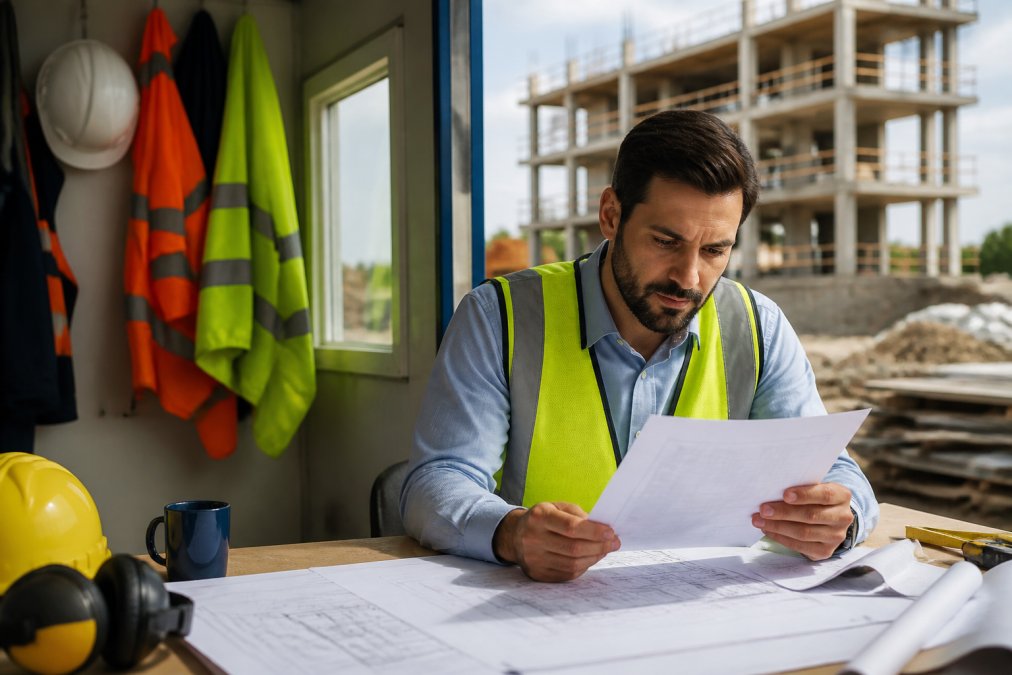
Effective risk management means understanding what insurance prevents versus what it compensates for. Insurance doesn't prevent delays or weather damage; it covers financial impacts. Some risks are better managed through operational controls (scheduling buffers, quality oversight, vendor selection) while others require financial protection.
Document your processes thoroughly: safety protocols, contractor qualifications, material inspections, and project timelines. Poor record-keeping turns covered losses into disputed ones.
Builders Risk Insurance Requirements and Coverage Gaps
Builders risk insurance protects the structure under construction, materials on-site, and temporary structures. Understanding what it covers prevents costly surprises.
What Builders Risk Covers During Construction
Builders risk insurance protects property during construction, including the building structure, permanently installed equipment, materials stored on-site, and temporary structures like scaffolding or site offices.
Coverage includes direct physical loss from fire, theft, vandalism, weather damage, and equipment failure, plus materials in transit, debris removal, and emergency repairs.
Coverage limits and inclusions vary significantly. Some cover loss of rents during delays; others don't. Some include off-site materials; others limit coverage to on-site items. Understanding these distinctions prevents gaps.
Common Coverage Gaps and How to Fill Them
Most standard builders risk policies exclude business interruption during delays, loss from design defects or faulty workmanship, and environmental contamination. These require specific endorsements.
Multi-state developers face additional gaps. A policy written for one jurisdiction may not extend to other states. Regulatory requirements differ by state, and what's covered in one location may be excluded in another. This is where flexible and secure insurance solutions become critical.
Contractual liability is another common gap. If your construction contracts require you to maintain certain insurance levels or indemnify contractors, your standard policy may not adequately address those obligations.
Equipment and contractor's tools left on-site create exposure gaps. Most policies limit coverage for contractor-owned equipment. Clarifying responsibility before construction begins prevents disputes.
Protecting Rental Income and Multi-State Property Portfolios
For developers who transition completed projects into rental operations, insurance strategy shifts dramatically. Rental properties generate ongoing income that must be protected, and regulatory requirements for insurance vary substantially by state.
State-Specific Insurance Mandates for Rental Properties
Each state imposes different minimum insurance requirements for rental properties. Understanding your obligations in each jurisdiction is essential before losses occur.
California requires landlords to maintain property insurance on rental buildings and has a duty to maintain habitable conditions.
Florida does not mandate property insurance by statute, but lenders require it and hurricane exposure makes underinsurance impractical.
Texas courts recognize broad landlord liability for tenant injuries, making liability coverage limits critical.
New York requires property insurance.
Coordinating Coverage Across Jurisdictions
Multi-state portfolios require a coordinated approach. Individual policies in each state create administrative complexity and coverage gaps. Umbrella or blanket policies often contain exclusions or limitations that vary by jurisdiction.
The most effective approach involves working with advisors who understand both your portfolio's geographic footprint and the specific regulatory environment in each state:
Mapping regulatory requirements by state. Document what each state requires: property insurance mandates, minimum coverage amounts, specific perils, environmental liability requirements.
Aligning policy forms with state law. States often modify standardized forms through endorsements or state-specific versions. Verify that each policy complies with the specific state's insurance code. Beyond regulatory compliance, project managers must also verify contractor insurance to ensure that every participant on the site maintains adequate coverage throughout the development lifecycle.
Coordinating loss of rents coverage. Rental income protection requires specific endorsements that vary by state. Some states recognize loss of rents as a covered peril; others require explicit endorsement.
Managing liability limits across states. State liability laws vary significantly. Some states recognize comparative negligence; others use contributory negligence. These legal differences affect the liability limits you need.
[State insurance commissioner offices and rental property(/best-insurance-for-rental-property-owners-2026-guide) requirements | naic.org]
Rental Income Protection Strategy
Rental income protection requires different coverage than development-phase insurance: property insurance reflecting current use, liability coverage for tenant occupancy, and loss of rents coverage. Development-phase limits may be insufficient for income-generating properties.
Loss of rents coverage protects your rental income during periods when the property is uninhabitable due to a covered peril. However, it typically covers only the period necessary to repair the property, not indefinite loss of income. If repairs take longer than expected, coverage may expire before the property is ready for occupancy.
Developing a rental income protection strategy means understanding your cash flow needs, financial capacity to absorb temporary income loss, and typical repair timelines for different types of damage.
Many developers underestimate the duration needed for loss of rents coverage. A fire might require 6-12 months for repairs; a flood 3-6 months. Loss of rents coverage extending only 90 days leaves you exposed for months of lost income.
How to Handle Insurance Claims for Out of State Rental Properties
Claims handling for out-of-state properties presents practical challenges: managing damage assessments from a distance, coordinating repairs across jurisdictions, and dealing with unfamiliar contractors and adjusters.
Document damage thoroughly before cleanup: take photographs and videos, create detailed inventories, and preserve evidence. Cleaning up before the adjuster inspects reduces claim value.
When filing claims, provide clear documentation including photos, repair estimates, and receipts for emergency repairs. Missing notice deadlines can result in claim denial even for covered losses.
Coordinate with local contractors for repairs and get pre-approval from your insurer for major work. Understanding your policy's requirements prevents disputes over repair costs.
For business interruption claims, maintain detailed records of lost rental income and related expenses to support your claim.
Tailored Coverage Structures for Real Estate Development
One-size-fits-all policies fail developers because development needs change constantly. Early-stage projects face different exposures than projects nearing completion. This is why flexible and secure insurance solutions matter.
Tailored coverage structures begin with honest assessment of your actual exposures: property value at risk, financial capacity to absorb losses, regulatory requirements, and lender/investor requirements.
Some developers benefit from project-specific policies; others need portfolio approaches. The right structure depends on your project mix, geographic footprint, and growth plans.
Deductible and limit structures should reflect your risk tolerance and financial position.
Building Resilience Against Property Damage and Liability Risks
Resilience means more than having insurance; it means having systems that help your business survive disruptions. For modern property developers, this increasingly includes technology-driven risk management that reduces both loss frequency and insurance costs.
Technology-Driven Risk Assessment and Premium Reduction
Modern risk assessment incorporates real-time data from building systems, environmental sensors, and predictive analytics. Insurers reward developers who implement these systems with measurable premium reductions.
Implementing Technology for Insurance and Operational Benefits
When evaluating systems, focus on:
Integration with existing building management systems. New systems should integrate with your property management software, HVAC controls, and security systems rather than operating as standalone installations.
Claims Resolution and Technology Documentation
Developers with technology-enabled properties should:
Maintain detailed system logs. Ensure that your building management system maintains at least 12 months of historical data from all monitoring systems. When claims arise, this data becomes critical evidence.
Traditional Resilience: Site Management and Loss Prevention
While technology provides modern risk reduction, traditional loss prevention practices remain foundational. Property damage resilience starts with site management and loss prevention. Proper drainage prevents water damage. Regular equipment maintenance prevents failure. Secure storage prevents theft. These operational practices reduce the frequency and severity of losses, which often translates to better insurance rates and faster claims resolution.
Frequently Asked Questions
What specific insurance coverages are essential for property development projects?
Property developers need builders risk insurance to cover construction materials and structures during building phases, general liability insurance to protect against bodily injury and property damage claims, and property and casualty coverage for completed buildings. Commercial property insurance protects the finished asset, while pollution liability and professional liability may apply depending on your project scope. Each coverage type addresses different stages of development and different risk exposures.
How does the 80% coinsurance rule impact property development claims?
The 80% coinsurance rule requires you to insure your property for at least 80% of its replacement value. If you underinsure and a claim occurs, the insurer reduces your payout proportionally. For example, if your property is worth $1 million but you only insure it for $700,000, you've failed to meet the 80% threshold, and claims will be reduced. Developers must accurately value properties and maintain adequate coverage limits to avoid penalties.
What is the difference between builders risk insurance and general liability for developers?
Builders risk insurance covers physical damage to the structure, materials, and equipment during construction phases. General liability insurance covers injuries to third parties and damage to others' property caused by your operations. Builders risk is essential during active construction; general liability protects you from lawsuits and medical claims. Both are necessary for comprehensive protection throughout a development project.
How can I ensure my out-of-state rental properties are properly insured and claims are handled smoothly?
Work with an insurance partner experienced in multi-state property management who understands each state's regulatory requirements and claims processes. Maintain consistent documentation of all properties, including condition reports and maintenance records. Establish clear communication channels with your insurer about claims procedures in each state, and consider appointing a local agent in key states for faster response times. Regular policy reviews ensure coverage remains aligned with property values and local market conditions.