 how-to
Why Did My Homeowners Insurance Increase in 2026
Table of Contents
- Why Your Homeowners Insurance Increased in 2026
- Climate Change and Catastrophic Weather Events
- Inflation, Building Materials, and Labor Costs
- Reinsurance Market Pressures and Carrier Decisions
- Your Claims History and Risk Assessment
- How to Lower Homeowners Insurance Premiums
- Homeowners Insurance Discount Checklist
- Navigating Non-Renewal and Finding Coverage
Last Updated: August 28, 2026
Why Your Homeowners Insurance Increased in 2026
Your homeowners insurance increase in 2026 reflects a convergence of forces reshaping the entire insurance market. Climate volatility, inflation in construction costs, reinsurance market strain, and your own claims history all feed into premium calculations. Understanding what's driving your rate hike is the first step toward finding relief.
At Fadaie Insurance Services, Inc., we've spent years helping homeowners navigate these exact increases. The reality is that most carriers aren't raising rates arbitrarily, they're responding to measurable shifts in risk and cost. But that doesn't mean you're stuck paying more. Many homeowners find that a thorough policy review, strategic mitigation efforts, or a switch to a carrier with better pricing for your risk profile can offset these increases significantly.
This guide walks you through the primary reasons rates are climbing, what you can control, and concrete steps to lower your premiums. By the end, you'll have a clear picture of your situation and actionable options.
Climate Change and Catastrophic Weather Events
Catastrophic weather events are the single largest driver of homeowners insurance premium increases across the country. Insurers track loss history meticulously, and the data shows that severe weather claims have accelerated over the past decade. Hurricanes, wildfires, hailstorms, and flooding are no longer treated as statistical outliers, they're built into actuarial models as predictable risk factors.
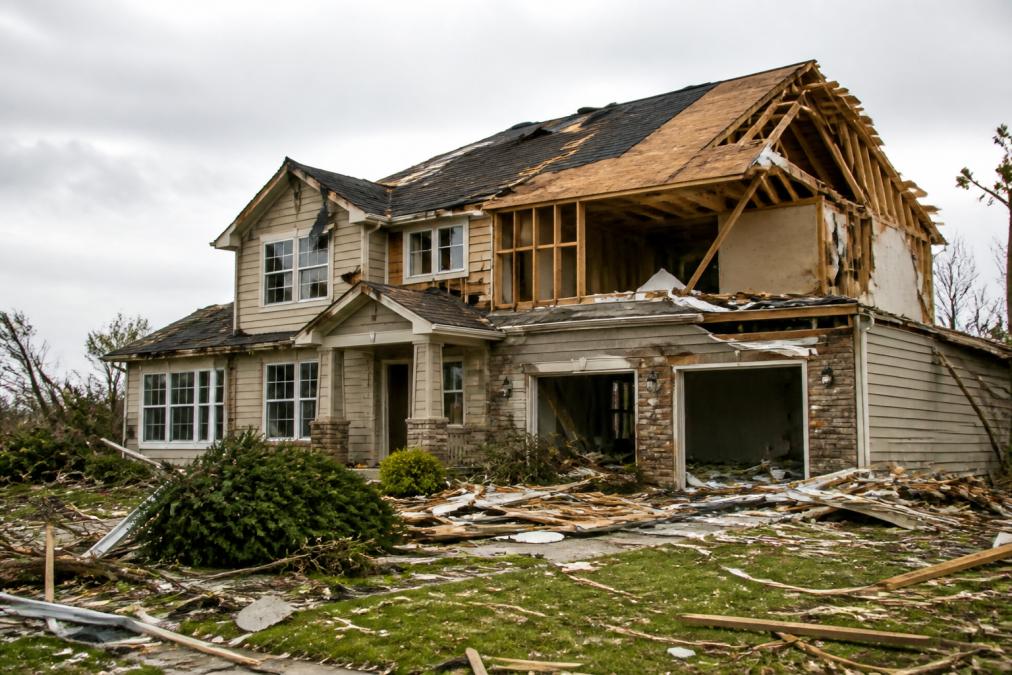
If you live in a region prone to wind, hail, or wildfire, your property falls into a higher-risk category. Carriers adjust their underwriting to reflect this reality. Some have even exited entire states or regions where climate risk has become economically unsustainable for them. This non-renewal crisis is real, carriers are tightening their books, which means remaining options often come with steeper premiums.
The relationship between climate risk and insurance costs is direct and measurable. Properties in high-hazard zones see significantly larger increases than those in low-risk areas. If your home sits in a wildfire-prone zone, coastal area, or severe weather corridor, expect your rates to reflect that exposure. This is where location matters more than almost any other factor in your premium calculation.
What many homeowners miss is that climate risk assessment has become granular. Carriers now use detailed mapping that goes beyond county or zip code. They evaluate specific wildfire risk models, flood plain data, and historical weather patterns for your exact neighborhood. A home two miles away might fall into a different risk category entirely.
Inflation, Building Materials, and Labor Costs
Replacement cost, the actual dollar amount it would take to rebuild your home, drives the coverage limit on your policy. When building material costs spike and labor becomes scarce, replacement costs climb. Your coverage limit may not have changed, but the cost to replace your home has.
Inflation in construction materials has been substantial since 2021 (bls.gov). Lumber, steel, copper, and drywall all experienced price surges. Labor shortages in the trades mean contractors charge more for installation. When a carrier recalculates your home's replacement cost, they're pricing it against current market conditions, not what it cost five years ago. That recalculation often triggers a coverage limit adjustment, which increases your premium.
Many homeowners carry outdated replacement cost estimates. If your home was last appraised at $250,000 but would actually cost $310,000 to rebuild today, your policy may be underinsured. Carriers recognize this gap and adjust premiums upward to reflect the true replacement value. It's not a rate hike in the traditional sense, it's a correction to align your coverage with reality.
This dynamic affects all homeowners, regardless of claims history or location. It's a macroeconomic factor that no individual can control. The only mitigation is ensuring your replacement cost estimate is accurate and current. An underestimated replacement cost leaves you exposed; an overestimated one inflates your premium unnecessarily.
Reinsurance Market Pressures and Carrier Decisions
Reinsurance is insurance for insurers. When a major hurricane or wildfire event occurs, primary insurers rely on reinsurance contracts to cover catastrophic losses. When reinsurance becomes expensive or harder to obtain, primary insurers pass those costs downstream to policyholders through higher premiums.
The reinsurance market has tightened considerably. After consecutive years of major losses, Hurricane Ian, Hurricane Helene, California wildfires, reinsurance carriers have raised their rates and tightened their terms (peer-reviewed research). Insurers shopping for reinsurance protection in 2026 are paying more than they did in 2024. That cost increase shows up in your homeowners policy.
Some carriers have also pulled back from high-risk markets entirely. When a major insurer exits a state or region, remaining carriers know they're absorbing a larger share of concentrated risk. They price accordingly. This market consolidation creates upward pressure on premiums across the board, even for homeowners with clean claims histories.
Carrier profitability is another factor. Many insurers operated at underwriting losses for years, absorbing more claims than they collected in premiums. 2026 has brought a reckoning. Carriers are raising rates to restore profitability and build reserves for future catastrophic events. This is a business decision, not a reflection of individual policyholder risk, but it affects everyone's rates.
Your Claims History and Risk Assessment
Your claims history is one of the few factors you can directly influence. Even a single claim, whether weather-related or not, can trigger a premium increase. Insurers view claims as a signal of future risk. Multiple claims signal higher risk, and higher-risk policyholders pay more.
The claims underwriting process has also become more rigorous. Carriers now use detailed loss prediction models that weigh not just the number of claims but the type, severity, and timing. A roof leak claim five years ago might have minimal impact today. A water damage claim last year could trigger a substantial increase. Catastrophic claims (total loss, major structural damage) stay on your record for years and significantly elevate your risk profile.
Some homeowners don't realize that even claims they filed but didn't use (claims where they paid the deductible out of pocket) still appear on their insurance record. These show up in the Comprehensive Loss Underwriting Exchange (CLUE) database, which insurers consult during renewal. A claim you made seven years ago might still be affecting your rates if it falls within the carrier's lookback window. identifying window seal failure.
The inverse is also true: a clean claims history is one of your strongest negotiating tools. If you've been claim-free for several years, you have use. Switching to a new carrier that weights your clean history more favorably than your current one can yield meaningful savings.
How to Lower Homeowners Insurance Premiums
Lowering your premiums requires a two-part approach: addressing what you can control immediately, and then shopping strategically for better rates. Start with the controllable factors, then move to market repositioning.
The most impactful action is increasing your deductible. Jumping from a $500 deductible to $1,000 or $1,500 can reduce your premium by 15-30%, depending on your carrier and location. This only makes sense if you have emergency savings to cover the higher deductible, but for homeowners with solid financial cushions, it's a straightforward way to lower monthly costs.

Home hardening and mitigation improvements can also lower your premiums. Installing impact-resistant roofing, upgrading to a Class A roof, adding storm shutters, or reinforcing your foundation reduces your risk profile in the eyes of carriers. Some improvements qualify for specific discounts. A new roof can earn you a 15-25% discount on your dwelling coverage (iii.org). Storm-resistant upgrades might lower your premium by 10-20%. These improvements require upfront investment, but the insurance savings compound over years and provide genuine protection.
Bundling your home and auto insurance with a single carrier often yields 10-25% in combined discounts. If you're shopping for new coverage, bundling should be a priority. Carriers incentivize bundling because it increases customer lifetime value and reduces their acquisition costs.
Shopping your policy every 2-3 years is essential. The insurance market is dynamic, carriers enter and exit markets, adjust their underwriting, and compete aggressively for new business. Your current carrier may have raised rates, but a competitor might be offering better pricing for your exact risk profile. Switching carriers is often the fastest way to offset a rate increase.
Discounts for safety and security features, alarm systems, smart home technology, fire extinguishers, can trim 5-15% off your premium. Review your current policy to see which discounts you're already receiving and which you might qualify for but haven't claimed.
Homeowners Insurance Discount Checklist
Use this checklist to identify discounts you may be missing and actions that can lower your premium.
| Discount/Action | Potential Savings | Status |
|---|---|---|
| Increase deductible to $1,000+ | 15-30% | [ ] Review |
| Install Class A roof or impact-resistant shingles | 15-25% | [ ] Investigate |
| Bundle home and auto insurance | 10-25% | [ ] Compare |
| Install home security or alarm system | 5-15% | [ ] Check eligibility |
| Add storm shutters or reinforced garage doors | 5-20% | [ ] Evaluate cost-benefit |
| Maintain clean claims history (no claims for 3+ years) | 5-10% | [ ] Track record |
| Switch to a new carrier | 10-40% | [ ] Shop quotes |
| Install smart home devices (water leak sensors, etc.) | 5-10% | [ ] Review available tech |
| Pay policy in full annually instead of monthly | 2-5% | [ ] Calculate savings |
| Loyalty discount (if staying with current carrier 3+ years) | 5-10% | [ ] Ask carrier |
The most effective approach combines multiple actions. A homeowner who increases their deductible, installs a new roof, bundles their policies, and switches to a more competitive carrier might reduce their total premium by 40-50%. The key is treating this as an ongoing process, not a one-time fix.
Navigating Non-Renewal and Finding Coverage
If your carrier has non-renewed your policy, you're facing a more urgent situation. Non-renewals have spiked in 2026 as carriers exit high-risk markets or tighten their underwriting. If you receive a non-renewal notice, you typically have 30-60 days to find alternative coverage.
Start immediately. Don't wait until your policy expires. Contact multiple carriers and independent agents to get quotes. The longer you wait, the fewer options you'll have and the more likely you are to end up in the residual market, the insurer of last resort, where rates are substantially higher.
If you can't find coverage in the standard market, state insurance pools exist to ensure you have access to homeowners insurance. These are typically called "insurer of last resort" or "Fair Plan" programs. Coverage is more expensive than standard market rates, but it provides legal protection. Research your state's program and understand the process before you need it.
Work with an independent insurance agent who has relationships with multiple carriers. Agents often have access to carriers that don't sell directly to consumers and can navigate the non-renewal landscape more effectively than shopping solo. This is where professional guidance adds real value, an agent knows which carriers are still writing in your area, which ones specialize in high-risk properties, and how to position your application for approval.
Document any home improvements or mitigation efforts you've completed. New roof? Upgraded electrical system? Reinforced foundation? These improvements make you a more attractive applicant to carriers and can lower your premiums with a new insurer. Bring documentation to every conversation with a potential new carrier.
The homeowners insurance increase you're experiencing in 2026 isn't random. It reflects real changes in climate risk, inflation in construction costs, and market dynamics that affect all carriers and all homeowners. While you can't control macroeconomic forces, you can control your deductible, your home's risk profile through improvements, and your shopping strategy. At Fadaie Insurance Services, Inc., our licensed advisors specialize in helping homeowners navigate exactly this situation, finding carriers that recognize your specific risk profile and securing competitive rates that reflect your actual exposure. The combination of strategic mitigation, policy optimization, and expert shopping often reduces premiums by 15-40%. Contact us today to review your options and explore how we can help you save.
Frequently Asked Questions
Why did my homeowners insurance go up so much in 2026?
Your homeowners insurance premiums increased due to multiple factors: rising replacement costs from inflation and labor shortages, increased catastrophic weather claims driving up reinsurance costs, and your insurer's actuarial data showing higher risk in your area. Climate-related losses have forced carriers to adjust rates across the board. Your personal claims history and property location also influence your specific increase.
How can I lower my homeowners insurance premiums?
Start by bundling home and auto policies, increasing your deductible if you can absorb the risk, and installing home hardening improvements like impact-resistant windows or upgraded roofing. Ask about discounts for safety features, alarm systems, and claims-free history. Shop your policy annually, different carriers price risk differently. Contact an independent agent who can compare multiple carriers quickly rather than staying with one insurer.
What is a homeowners insurance discount checklist?
A discount checklist includes actions that qualify you for rate reductions: bundling policies, installing security systems, upgrading to impact-resistant roofing, maintaining a claims-free record, paying annually instead of monthly, completing a home inspection, and installing water leak detection. Some insurers offer discounts for paperless billing or completing a home safety course. Ask your agent which discounts your carrier offers and which you already qualify for.
Can I contest a homeowners insurance rate increase?
Yes. Request an explanation of the increase from your carrier and review your policy details for accuracy. If you've made home improvements or your claims history is clean, inform your agent. Some states allow formal appeals to the state insurance commissioner if you believe the rate is unjustified. If your carrier is non-renewing, work with an independent agent to find coverage elsewhere before your policy lapses.
This article was written using GrandRanker