 how-to
How to Find Homeowners Insurance in California 2026
Table of Contents
- Why Finding Homeowners Insurance in California Is Harder in 2026
- Step-by-Step: How to Find Homeowners Insurance in California
- Homeowners Insurance Quotes Comparison: What to Look For
- Admitted vs Non-Admitted Insurance Carriers: What the Difference Costs You
- California FAIR Plan Requirements and When to Use It
- What to Do If You Are Denied Homeowners Insurance Coverage
- Mitigation Discounts and Home Hardening Strategies That Lower Premiums
- Conclusion
Last Updated: August 24, 2026
Why Finding Homeowners Insurance in California Is Harder in 2026
Knowing how to find homeowners insurance in California 2026 is no longer a simple matter of calling a few carriers and comparing quotes. The market has fundamentally changed. Major admitted carriers have pulled back from high-risk ZIP codes, non-renewals have accelerated across fire-prone counties, and many homeowners are discovering mid-policy that their coverage is simply gone.
At Fadaie Insurance Services, Inc., we've worked with homeowners across California through multiple market cycles. The core problem is this: wildfire risk assessment models have grown more sophisticated, and insurers are applying them aggressively. Properties that were insurable three years ago are now being declined outright.
The good news is that coverage still exists. It's just harder to find, and it requires a more deliberate process than most homeowners expect. Below, we'll walk through exactly how to navigate the current market, from assessing your risk profile to understanding your options in the non-admitted and surplus lines markets.
One thing most guides get wrong: they treat the FAIR Plan as a last resort to be avoided. The reality is more nuanced. For many California homeowners, the FAIR Plan is a legitimate part of a coverage strategy, not a failure state.
California Department of Insurance homeowners insurance resources
Step-by-Step: How to Find Homeowners Insurance in California
Finding coverage in 2026 requires a structured approach. Working through these steps in order saves time and improves your chances of landing a policy that actually fits your property.

Step 1: Assess Your Property's Risk Profile
Start with your property's fire hazard severity zone designation. The California Department of Forestry and Fire Protection publishes official fire hazard severity zone maps, and your property's designation directly drives underwriting decisions. If your home sits in a High or Very High severity zone, expect a smaller pool of willing carriers and higher premiums across the board.
Pull your claims history report before you start quoting. A history of water damage or fire claims will narrow your options further. Carriers also look at roof age, construction materials, distance to a fire station, and defensible space compliance. Know these details before your first conversation with an agent.
Step 2: Check Which Admitted Carriers Are Still Writing Policies
The California Department of Insurance maintains a list of licensed admitted carriers. Not all of them are actively writing new homeowners policies, and the list shifts frequently. Check the department's website directly, or ask an independent agent to run a current market check on your behalf.
Admitted carriers operate under state regulatory oversight, which means their rates are approved by the Insurance Commissioner and policyholders have access to the California Insurance Guarantee Association if the carrier becomes insolvent. That protection matters. Start here before moving to non-admitted options.
Step 3: Work With a Licensed Independent Agent or Broker
This is the step most homeowners skip, and it costs them. An independent agent has access to multiple carriers simultaneously, including both admitted and surplus lines markets. A captive agent represents one company only.
In a constrained market, access to multiple underwriting relationships is not a convenience, it's a necessity. Independent agents also know which carriers are actively writing in specific ZIP codes, which is information that isn't always publicly available.
Step 4: Apply Wildfire Mitigation Measures Before You Quote
Mitigation work done before you request quotes can meaningfully change your outcome. Carriers increasingly offer credits for documented home hardening measures. Clearing defensible space to 100 feet, installing ember-resistant vents, and replacing wood shake roofing are all underwriting factors that can move a declined application to an approved one.
Get the work documented. Photographs, contractor receipts, and a completed home hardening checklist from a recognized program all serve as evidence during underwriting.
Homeowners Insurance Quotes Comparison: What to Look For
A homeowners insurance quotes comparison is only useful if you're comparing the same coverage structure across carriers. Most homeowners make the mistake of comparing annual premiums without checking whether the underlying coverage limits match.
| Coverage Element | What to Check | Why It Matters |
|---|---|---|
| Dwelling coverage | Replacement cost vs. actual cash value | Replacement cost pays to rebuild; ACV deducts depreciation |
| Personal property | Coverage limit and sub-limits | Electronics, jewelry, and art often have separate caps |
| Liability coverage | Minimum $300K recommended | Protects against lawsuits from injuries on your property |
| Deductible structure | Separate wildfire deductible? | Many policies now carry a distinct fire/wind deductible |
| Additional living expenses | 20-30% of dwelling coverage typical | Covers hotel and rental costs if you're displaced |
| Policy endorsements | Scheduled items, ordinance coverage | Gaps appear here most often |
When comparing quotes, verify that each policy uses replacement cost valuation for the dwelling, not actual cash value. Also check whether a separate wildfire deductible applies, since many carriers now include one that's calculated as a percentage of the dwelling limit rather than a flat dollar amount.
Admitted vs Non-Admitted Insurance Carriers: What the Difference Costs You
Admitted carriers are insurers licensed and regulated by the California Department of Insurance. Their rates are filed with and approved by the state, and policyholders are protected by the California Insurance Guarantee Association up to statutory limits if the carrier fails.
Non-admitted insurers, often called surplus lines carriers, are not licensed in California but are legally permitted to operate here through licensed surplus lines brokers. They are not subject to rate approval, which means they can price risk more freely. They also fall outside the guarantee association's protection net.
The practical difference: admitted carriers offer more regulatory protection but have largely retreated from high-risk areas. Non-admitted surplus lines carriers are often the only option for properties in Very High fire hazard severity zones.
The surplus lines market is not a fringe option. It is a legitimate, regulated channel with significant capacity. Many well-capitalized insurers operate exclusively as non-admitted carriers because it gives them underwriting flexibility. The key is working with a licensed surplus lines broker who can access this market and evaluate the financial stability rating of any carrier before you bind coverage.
California Surplus Line Association market resources
California FAIR Plan Requirements and When to Use It
The California FAIR Plan is the state's insurer of last resort, available to homeowners who cannot obtain coverage in the voluntary market. California FAIR Plan requirements are straightforward: you must have been declined by at least one admitted carrier, and the property must meet basic insurability standards.
What the FAIR Plan covers is more limited than a standard homeowners policy. It provides fire, lightning, internal explosion, and smoke coverage by default. It does not automatically include liability coverage, theft, or water damage. Most homeowners who use the FAIR Plan pair it with a Difference in Conditions policy from a surplus lines carrier to fill those gaps.
The FAIR Plan is not cheap. Premiums reflect the elevated risk profile of the properties it covers. But for homeowners in high-risk fire areas who have exhausted the admitted market, it provides a legal, functioning coverage solution.
One thing worth knowing: the FAIR Plan has expanded its coverage options in recent years following pressure from the Insurance Commissioner. It now offers higher dwelling limits than it historically did, which makes it a more viable primary coverage option for higher-value homes.
California FAIR Plan Association official site
What to Do If You Are Denied Homeowners Insurance Coverage
Being denied coverage is not the end of the road. A denial from one carrier is underwriting data, not a final verdict. The process of responding to a denial matters.
Filing a Complaint With the California Department of Insurance
If you believe a carrier denied your application improperly, or if a non-renewal appears to violate state regulations, you can file a formal complaint with the California Department of Insurance. The CDI investigates complaints against admitted carriers and can require carriers to justify their underwriting decisions.
This step is most relevant when a non-renewal arrives without adequate notice (California law requires 75 days' notice for non-renewals after the first year of a policy) or when a denial appears to be based on incorrect property information.
Appealing an Underwriting Decision
Most carriers have a formal appeals process for declined applications. The strongest appeals are supported by documentation: a recent home inspection, photographs of completed mitigation work, updated property records, or a corrected claims history report.
A common mistake is appealing without new information. Simply asking a carrier to reconsider without providing evidence they didn't have in the original application rarely changes the outcome. The appeal needs to give the underwriter a reason to reach a different conclusion.
If the admitted market remains closed after an appeal, move to the surplus lines market or the FAIR Plan. The goal is coverage, not a specific carrier.
Mitigation Discounts and Home Hardening Strategies That Lower Premiums
Home hardening is the single most actionable lever California homeowners have over their insurability and their annual premium. Carriers that are still writing policies in high-risk areas are increasingly differentiating between hardened and unhardened homes, and the difference in underwriting outcomes can be significant.
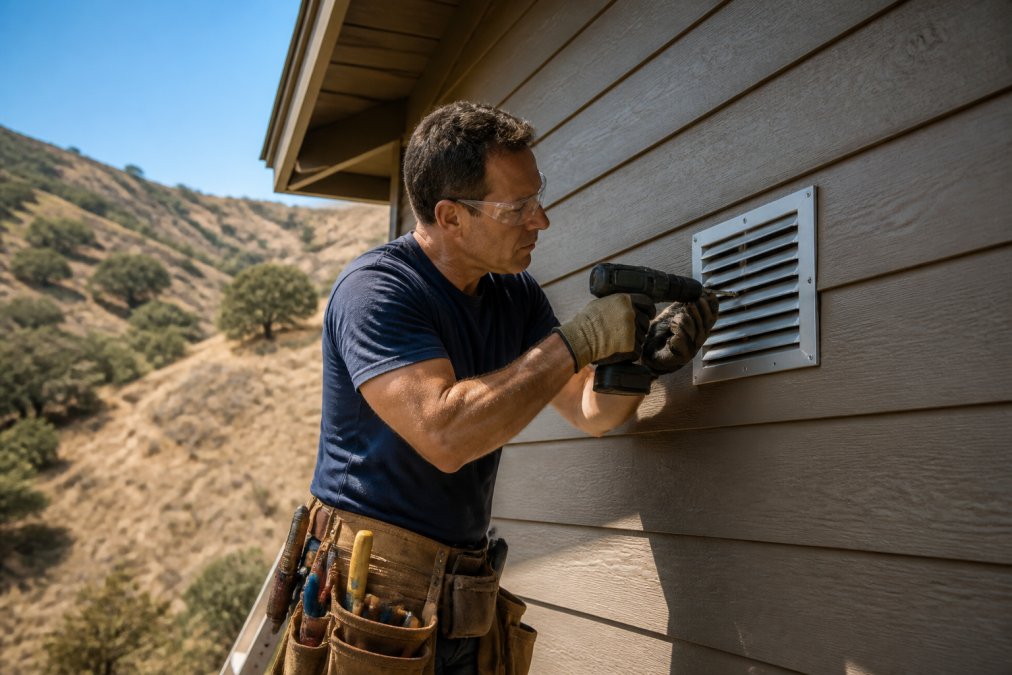
The measures that carry the most weight with underwriters:
- Ember-resistant vents: Flying embers are the primary ignition source in most structure fires during wildfires. Replacing standard vents with ember-resistant models is a high-impact, relatively low-cost upgrade.
- Class A roofing material: Wood shake and other combustible roofing materials are a hard stop for many carriers. A Class A rated roof (metal, tile, or composition shingle) is often a prerequisite for coverage.
- Defensible space: California law requires 100 feet of defensible space around structures. Compliance documentation strengthens your application and may qualify you for a mitigation discount.
- Enclosed eaves and non-combustible siding: Open eaves create ember accumulation points. Enclosing them and replacing combustible siding removes ignition pathways.
- Tempered or dual-pane windows: Standard single-pane windows can fail during radiant heat exposure, allowing embers inside. Upgraded glazing is a recognized hardening measure.
The Insurance Commissioner's Safer from Wildfires framework establishes a set of home hardening standards that admitted carriers are required to consider when offering discounts. Completing measures under this framework and documenting them creates a verifiable record that carriers can use to justify a lower premium or approve a previously declined application.
What most homeowners miss: mitigation discounts are not automatic. You need to present the documentation proactively. Photographs, contractor invoices, and a completed checklist tied to a recognized program (such as the IBHS Wildfire Prepared Home designation) give your agent the materials needed to negotiate on your behalf.
| Hardening Measure | Underwriting Impact | Estimated Difficulty |
|---|---|---|
| Ember-resistant vents | High | Low |
| Class A roofing | High | High |
| Defensible space (100 ft) | High | Medium |
| Enclosed eaves | Medium | Medium |
| Tempered windows | Medium | Medium |
| Non-combustible siding | High | High |
Working through these measures systematically, and documenting each step, is the most direct path to improving both your insurability and your long-term premium trajectory.
Finding homeowners insurance in California in 2026 is genuinely difficult, but it is not impossible with the right approach. The homeowners who struggle most are those who go carrier to carrier on their own, without understanding the admitted versus surplus lines distinction or the role mitigation documentation plays in underwriting decisions. Fadaie Insurance Services, Inc. has been helping homeowners navigate complex insurance markets since 2006. Our licensed advisors work across admitted and non-admitted markets, document your property's risk profile, and advocate through the underwriting process so you're not starting from zero with each carrier. Contact us today to get a real assessment of your options.
Frequently Asked Questions
Q: How do I find homeowners insurance in California if I've already been denied?
A: Start by requesting a written denial from your insurer, which you can use in an appeal or when approaching other carriers. Contact a licensed independent agent who accesses both the admitted market and surplus lines insurers. If no voluntary market carrier will cover your property, you can apply for the California FAIR Plan as a last resort. The California Department of Insurance also operates a consumer hotline to help policyholders understand their options after a denial.
Q: Who is still selling homeowners insurance in California in 2026?
A: Several admitted carriers have paused or restricted new policies, particularly in high fire hazard severity zones. Non-admitted surplus lines insurers have stepped in to fill part of that gap, though their premiums are typically higher and they carry less regulatory oversight. The California FAIR Plan remains available statewide as a last-resort option. An independent broker with access to multiple markets is currently the fastest way to identify which carriers are actively writing new policies for your specific address and risk profile.
Q: What are the California FAIR Plan requirements for homeowners?
A: The California FAIR Plan is available to any property owner who has been unable to obtain coverage through the voluntary market. To qualify, you must show that at least one admitted carrier has declined to insure your property. The plan provides basic dwelling protection against fire, lightning, and certain other perils, but it does not include liability coverage or personal property protection by default. Most homeowners pair a FAIR Plan policy with a separate Difference in Conditions policy to fill those coverage gaps.
Q: Does wildfire mitigation actually lower my homeowners insurance premium?
A: Yes, in many cases. Under California's Safer from Wildfires framework, insurers are required to offer discounts to policyholders who complete recognized home hardening steps, such as installing Class A roofing, clearing defensible space, and using ember-resistant vents. The discount amount varies by carrier and the specific improvements made. Documenting your mitigation work with photos and receipts before requesting a new quote gives underwriters the evidence they need to adjust your risk assessment and annual premium.
This article was written using GrandRanker