 listicle
5 Best Small Business Liability Insurance Providers 2026
Table of Contents
- Quick Comparison: 5 Best Small Business Liability Insurance Providers 2026
- How We Evaluated These Small Business Liability Insurance Providers
- 1. Fadaie Insurance Services, Inc.: Best for Personalized Liability Coverage
- 2. The Hartford: Best for Industry-Specific Liability Packages
- 3. NEXT Insurance: Best Digital-First Experience for Small Businesses
- 4. biBERK: Best Budget-Friendly Direct Liability Insurance
- 5. Hiscox: Best for Professional Liability and E&O Coverage
- Types of Small Business Insurance You Should Know
- Frequently Asked Questions
Last Updated: October 1, 2026
Quick Comparison: 5 Best Small Business Liability Insurance Providers 2026
Matching your risk profile to the right carrier is what matters. This guide breaks down five standout options for 2026.
Quick Picks:
- Best for Personalized Coverage: Fadaie Insurance Services, Inc., independent agency with licensed advisors who fill coverage gaps
- Best for Industry-Specific Packages: The Hartford, deep bench of trade-specific policies
- Best Digital-First Experience: NEXT Insurance, instant certificates and app-based management
- Best Budget-Friendly Direct Option: biBERK, direct-to-consumer model backed by Berkshire Hathaway
- Best for Professional Liability and E&O: Hiscox, specialist in errors and omissions coverage
| Provider | Best For | Pricing Model | Standout Feature |
|---|---|---|---|
| Fadaie Insurance Services, Inc. | Personalized coverage | Quote-based | Independent agency, gap analysis |
| The Hartford | Industry-specific packages | Quote-based | Trade-specific policies |
| NEXT Insurance | Digital-first experience | Subscription/Annual | Instant COI generation |
| biBERK | Budget-friendly direct | Quote-based | Direct-to-consumer savings |
| Hiscox | Professional liability and E&O | Quote-based | Specialized E&O policies |
How We Evaluated These Small Business Liability Insurance Providers
We scored each provider on five weighted criteria.
- Coverage breadth and fit (25%): Does the carrier write the coverages your industry needs, general liability, professional liability, BOP, workers' comp, cyber, commercial auto, or only a narrow slice?
- Claims handling and process transparency (30%): Our heaviest weight. We looked at how a claim is filed, first-response expectations, whether the carrier uses staff adjusters or third-party administrators, and how defense counsel is selected.
- Quote and pricing transparency (15%): Can you get a real number online, or does every quote require a phone call and a multi-day wait?
- Digital tools versus human support (15%): Digital-first platforms win on speed and self-service; independent agencies and traditional carriers win on complex risk, gap analysis, and advocacy in a disputed claim.
- Industry-specific risk handling (15%): Does the carrier publish trade-specific policies, class codes, and endorsements, or force every business into a generic general liability form?

What the claims process actually looks like
Choosing a provider on premium alone is a common mistake. The real difference shows up at claim time, when defense costs and settlement handling decide whether your business survives a lawsuit.
- First notice of loss. You report the claim through the carrier's channel, phone, portal, or app. Ask how quickly you get a claim number and named contact.
- Adjuster assignment. The carrier assigns an adjuster, either an employee or a third-party administrator. Ask whether they are in-house and specialize in your industry's class codes.
- Coverage determination. The adjuster compares the claim against your policy form, limits, and exclusions. This is where the exclusions page you reviewed at purchase protects you or does not.
- Defense and investigation. If covered, the carrier appoints defense counsel, usually from its panel, and may issue a reservation of rights letter while investigating.
- Settlement or trial. The carrier negotiates or litigates within your limits. Your deductible and any amounts above your limit come out of your pocket.
Digital-first versus traditional agent support
The trade-off is real. Digital-first platforms (instant quotes, app-based certificates, self-service changes) excel for low-complexity risks, a solo consultant, home-based freelancer, or small retail shop. They are weaker when exposure is unusual, a claim is disputed, or you need someone to argue your side.
1. Fadaie Insurance Services, Inc.: Best for Personalized Liability Coverage
Fadaie Insurance Services, Inc. is an independent agency serving individuals, families, and businesses since 2006. Its licensed advisors compare options across multiple carriers and identify gaps in your current coverage.
Pros:
- Independent agency with access to multiple carriers
- Licensed advisors who help fill coverage gaps
- Technology-driven efficiency for faster quotes and responses
Cons:
- Pricing depends on your specific risk profile and requires a personalized quote
Small and midsize business owners who want a licensed advisor to review their full risk exposure rather than buy a single off-the-shelf policy.
2. The Hartford: Best for Industry-Specific Liability Packages
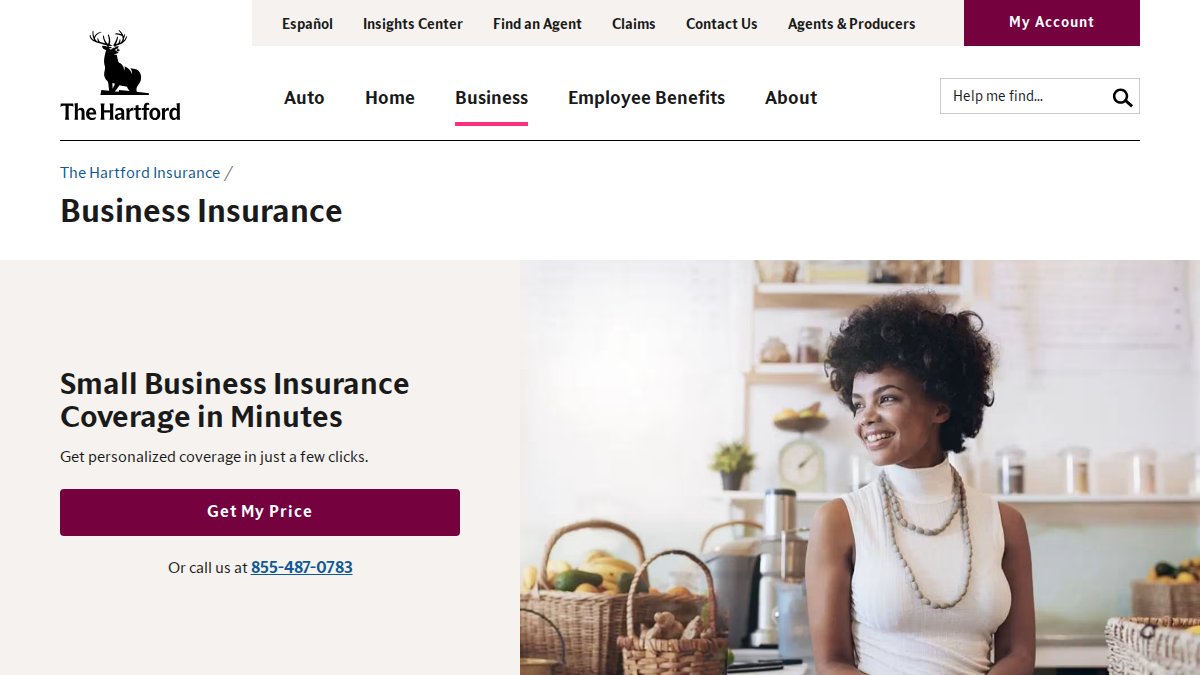
The Hartford built its small business reputation on industry-specific coverage, offering packages tailored to trades, retail, professional services, and more instead of a generic policy.
Pros:
- Strong reputation and financial stability
- Wide range of specialized coverage options
Cons:
- Pricing is not transparent without a formal quote
3. NEXT Insurance: Best Digital-First Experience for Small Businesses
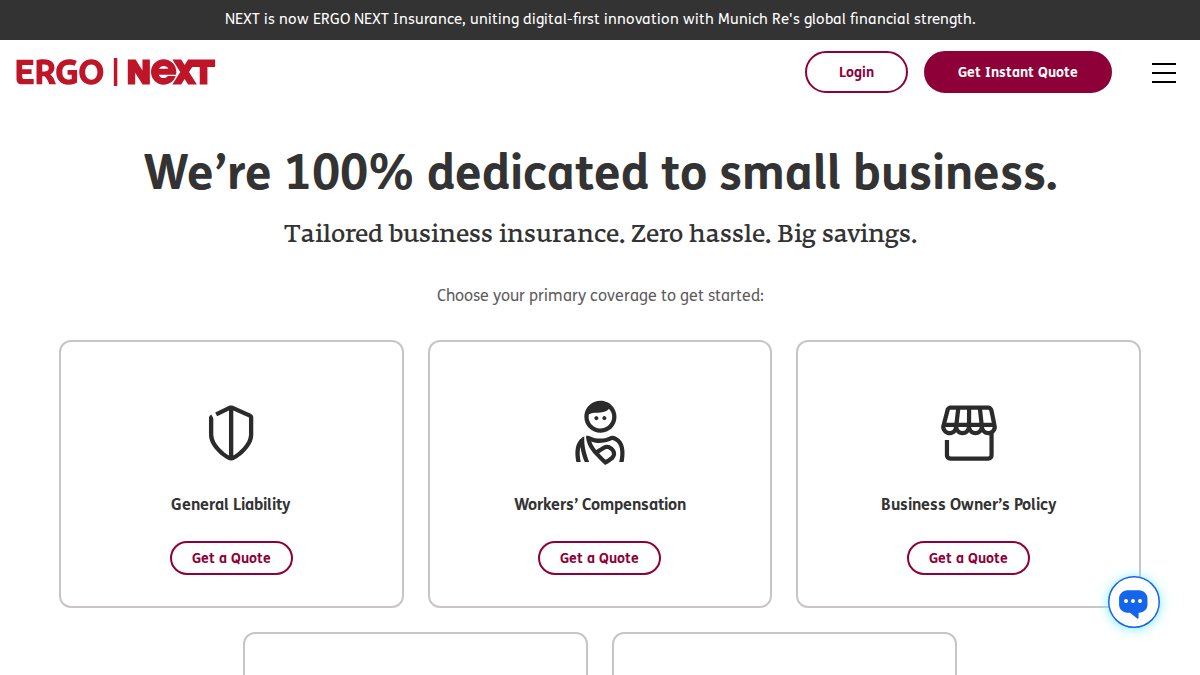
NEXT Insurance targets owners who want coverage without a phone call. It generates an instant certificate of insurance online, useful when a client or landlord needs proof before you start a job.
Pros:
- Very fast quote and purchase process
- User-friendly digital platform
Cons:
- Limited support for complex, large-scale commercial risks
4. biBERK: Best Budget-Friendly Direct Liability Insurance
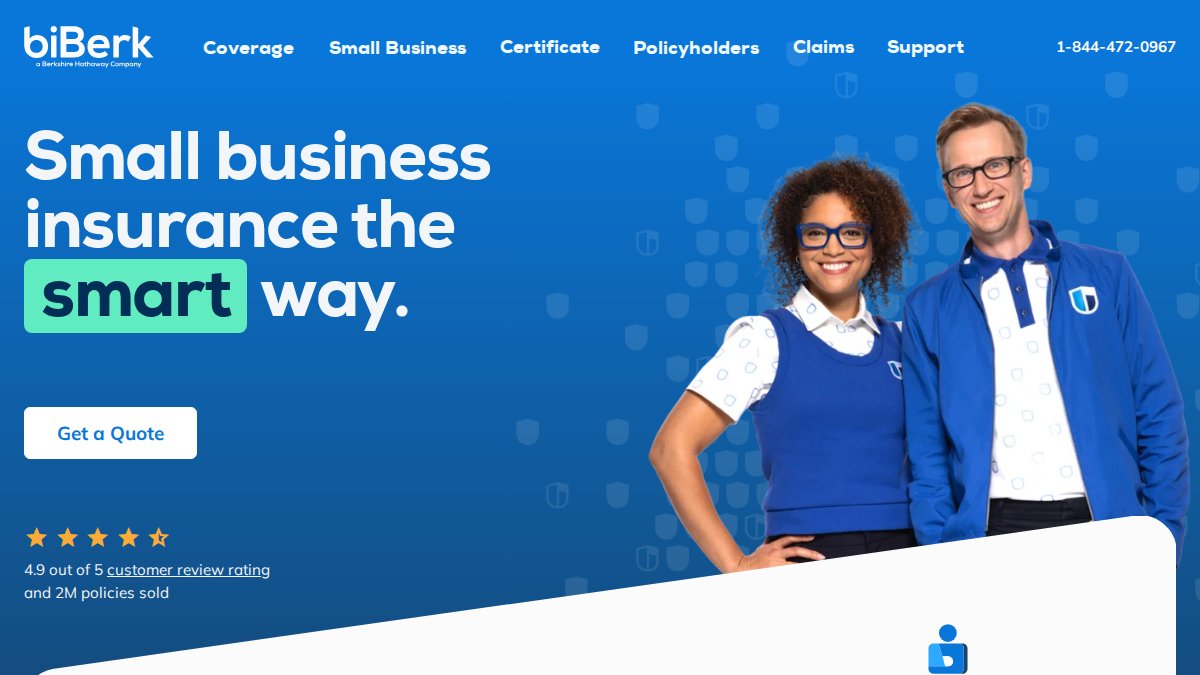
biBERK, a Berkshire Hathaway subsidiary, sells directly to small business owners. Cutting the agent layer reduces overhead, which shows in pricing for straightforward risks.
Pros:
- Competitive pricing due to direct model
- Strong financial backing
Cons:
- Fewer niche industry coverage options compared to larger carriers
5. Hiscox: Best for Professional Liability and E&O Coverage
Hiscox specializes in professional liability, or errors and omissions coverage, protecting service providers against claims of negligence, missed deadlines, or faulty advice. General liability typically excludes these claims, so consultants, freelancers, and professional service firms often need both.
Pros:
- Excellent reputation for customer support
- Highly specialized policies for service-based industries
Cons:
- May be more expensive than budget-focused providers
Types of Small Business Insurance You Should Know
Most small businesses need more than one policy. The right mix depends on your industry, payroll, location, and whether you give professional advice. The list below covers the core coverages.
- General liability insurance: Covers third-party claims of bodily injury, property damage, and personal and advertising injury. It is the baseline policy nearly every commercial lease, client contract, and general contractor requires.
- Professional liability (errors and omissions): Covers claims that your advice, design, or service caused a client financial loss, missed deadlines, faulty recommendations, failure to deliver. General liability excludes these, so service firms usually carry both.
- Workers' compensation: Required in most states once you hire employees (typically at the first employee, though some states set a higher threshold). It covers workplace injuries and, in most states, shields the employer from most injury lawsuits.
- Commercial property insurance: Covers your building, equipment, inventory, and tenant improvements against fire, theft, and other covered perils. If you lease, your landlord's policy covers the building, not your contents or build-out.
- Business owners policy (BOP): Bundles general liability and commercial property at a lower combined premium than buying separately. It is usually the most cost-efficient starting point for a low-risk small business with a physical location.
- Cyber liability: Covers data breaches, ransomware, business email compromise, and the notification and credit-monitoring costs that follow. Small firms often assume general liability responds to a breach, it almost never does.
- Business interruption: Replaces lost income and ongoing fixed costs (rent, loan payments, payroll) when a covered event forces a temporary closure. Typically sold as part of a BOP or commercial property policy, not standalone.
- Commercial auto and hired/non-owned auto: Covers business-owned vehicles and, in the non-owned form, employees driving their own cars on company errands. Personal auto policies frequently exclude business use.
- Umbrella or excess liability: Sits above your general liability, auto, and employers liability limits and responds when a claim exhausts the underlying policy. It is the cheapest way to raise total limits once the primary policy is in place.
How risk profile changes the mix
A home-office consulting firm and a roofing contractor have almost nothing in common from an underwriting standpoint, even though both are "small businesses."
| Business type | Usually essential | Often overlooked |
|---|---|---|
| Consulting, marketing, IT services | General liability, professional liability (E&O) | Cyber liability, business interruption |
| Retail storefront | General liability, commercial property, BOP | Business interruption, commercial auto |
| Restaurant or food service | General liability, commercial property, workers' comp | Liquor liability, spoilage/equipment breakdown |
| Construction and trades | General liability, workers' comp, commercial auto | Umbrella/excess, tools and equipment floater |
| Healthcare and wellness | Professional liability, general liability | Cyber liability, workers' comp |
| Home-based service business | General liability, professional liability | Hired/non-owned auto, inland marine for tools |
Frequently Asked Questions
What is the average cost of general liability insurance for a small business?
General liability insurance cost varies widely based on industry, annual revenue, location, and coverage limits. Businesses with lower-risk operations often pay less, while contractors and restaurants typically pay more due to higher claims risk. Most providers require a quote to give an accurate premium. Fadaie Insurance Services, Inc. works with multiple carriers to find competitive pricing for your specific business profile, so you can compare options without overpaying.
Do I really need liability insurance for my small business?
Yes, most small businesses need liability insurance to protect against third-party claims for bodily injury, property damage, or personal and advertising injury. Without it, a single lawsuit could threaten your assets. Many contracts and commercial leases also require a certificate of insurance before you can work. Even home-based businesses face risk. A business owners policy (BOP) often bundles general liability and commercial property coverage at a lower combined premium.
How do I choose the right insurance provider for my business?
Start by confirming the provider offers the types of small business insurance you need, such as general liability, professional liability, or workers compensation. Check financial strength ratings, claims handling reputation, and whether they support your industry. Independent agencies like Fadaie Insurance Services, Inc. can compare multiple carriers and help fill gaps in coverage. Ask about digital tools for certificates of insurance and policy renewal to save time.
What is the difference between general liability and professional liability insurance?
General liability covers third-party bodily injury, property damage, and personal and advertising injury claims. Professional liability, also called errors and omissions (E&O), covers claims that your advice or services caused a client financial loss. Consultants, accountants, and IT firms typically need both. A general liability policy will not respond to a negligence claim about your professional services, so review your contractual requirements carefully.
How can I get a business insurance quote quickly?
Gather your business details first: industry, annual revenue, number of employees, location, and prior claims history. Then visit a provider's website or contact an independent agency. Digital-first carriers like NEXT Insurance and Thimble offer instant online quotes, while agencies like Fadaie Insurance Services, Inc. can shop multiple carriers for you. Having your information ready speeds up the underwriting process and helps you compare quote options accurately.
Choosing the wrong liability provider often only becomes clear after a claim, when exclusions surface and defense costs land on your balance sheet. Fadaie Insurance Services, Inc. helps small business owners avoid that outcome with licensed advisors who compare carriers, identify gaps in coverage, and provide personalized support from quote through renewal. Get started with Fadaie Insurance Services, Inc. and protect your business with coverage built around your actual risk.