 how-to
Why Independent Agents Save You Money on Insurance
Table of Contents
- How Independent Agents Reduce Your Premiums
- Independent vs Captive Insurance Agents: What's the Difference?
- Insurance Policy Comparison Tips to Maximize Savings
- How to Switch Insurance Agents Without Paying More
- Why Bundling Home, Auto, and Umbrella Saves Even More
- Common Myths About Independent Agents and Your Costs
- Conclusion
- Frequently Asked Questions
Last Updated: September 12, 2026
How Independent Agents Reduce Your Premiums
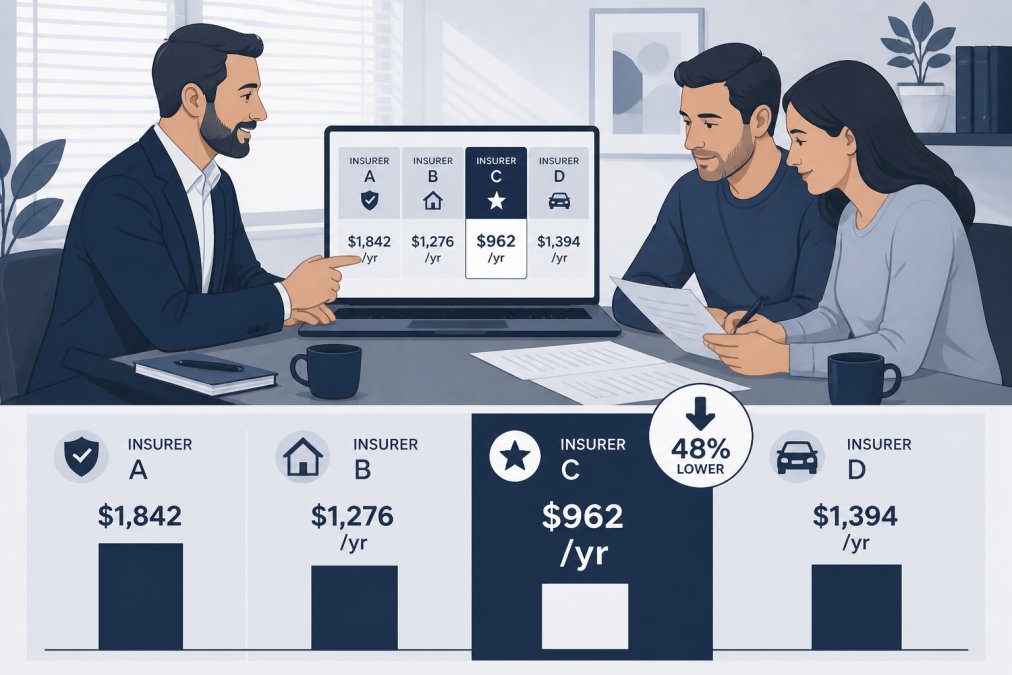
Why do independent agents save you money? Because they can quote your risk across multiple carriers instead of presenting one company's rate as your only option. That single structural difference is the whole ballgame. An independent agent works for you, not for a single insurance brand, and that changes which quotes ever reach your desk.
At Fadaie Insurance Services, Inc., we've watched this play out for years: the same driver, same home, same coverage limits, wildly different prices depending on which carrier sees the application. An independent agent's job is to find the carrier that wants your specific risk profile.
Here's the mechanism most people miss: carriers don't price risk uniformly. One insurer may be aggressive on newer roofs, another on drivers with one at-fault accident, another on homes near wildfire zones. A captive agent can only sell you their employer's appetite. An independent agent can match your profile to the carrier that currently wants it.
Independent vs Captive Insurance Agents: What's the Difference?
A captive insurance agent represents one company and can only sell that company's policies. An independent agent represents multiple carriers and can place your coverage with whichever one fits best (naic.org). That's the entire distinction, and it drives everything else.
The practical consequences stack up quickly:
- Carrier access: Captive agents offer one product line. Independent agents can quote several.
- Renewal use: When one carrier raises rates, an independent agent can move you without you starting over.
- Coverage gaps: Independent agents typically review your whole picture, home, auto, umbrella, and flag what's missing.
- Who they answer to: Captive agents answer to their employer. Independent agents answer to you.
What most guides miss is that this isn't about one type of agent being more honest. It's about structural incentives. A captive agent who can't place your risk has nothing left to offer. An independent agent who can't place it with Carrier A simply tries Carrier B.
Insurance Policy Comparison Tips to Maximize Savings
Comparing policies properly means comparing coverage line by line, not just the bottom-line premium. The cheapest quote often wins the sale and loses the claim. Here's how to compare without getting fooled.
Start with these checks:
- Deductibles: A higher deductible lowers premium, but make sure you could actually pay it after a loss.
- Coverage limits: Match limits across quotes. A lower premium with lower limits isn't a savings, it's a downgrade.
- Exclusions: Read what's excluded. Wind, flood, and wildfire coverage vary enormously by carrier and region.
- Replacement cost vs. actual cash value: Replacement cost costs more upfront and pays far more at claim time.
- Discounts applied: Confirm which discounts are baked in and which require action from you.
A common mistake is comparing three quotes with three different coverage structures and picking the lowest number. That's not a comparison. That's a guess.
How to Switch Insurance Agents Without Paying More
Switching agents does not mean canceling coverage and starting fresh. In most cases your policy simply moves to a new agent of record, and your coverage continues uninterrupted. The carrier stays the same; the person servicing you changes.
Here's the sequence that avoids gaps and surprises:
- Get quotes first. Have the new agent quote your current coverage before you cancel anything.
- Check your current policy term. Mid-term switches can trigger short-rate cancellation fees with some carriers.
- Confirm the effective date. Your new policy should start the day your old one ends, never a day later.
- Request an agent-of-record change if you're keeping the same carrier but changing who services you.
- Cancel in writing once the new policy is confirmed active.
- Verify refunds. Any unused premium from the old policy should come back to you.
The thing nobody tells you about switching is that your claims history and continuous coverage matter more than which agency holds your policy. A lapse of even a few days can raise your rate with the next carrier (iii.org). Never cancel before the new policy is bound.
Why Bundling Home, Auto, and Umbrella Saves Even More
Bundling saves money because carriers discount multi-policy households, and because umbrella coverage is inexpensive relative to the liability protection it adds. The bundle discount is the headline. The umbrella policy is the quiet win.
Most people carry liability limits on their home and auto policies that wouldn't cover a serious claim. An umbrella policy sits on top and extends that protection (iii.org). For affluent homeowners with significant assets, that gap is the real exposure, not the premium difference between two carriers.
Bundling also simplifies your life in ways that matter at claim time:
- One agent knows your whole picture
- One renewal conversation instead of three
- Gaps get caught before they become claim denials
- Discounts compound across policies
For rental property owners and business owners, the same logic applies. A landlord policy, a personal auto policy, and a commercial policy held by one agency means someone is watching the overlaps. When a tenant injury claim touches both your rental policy and your umbrella, you want one person who understands how they interact.
Common Myths About Independent Agents and Your Costs
Independent agents are not more expensive than captive agents, and they don't charge you a fee for shopping your policy. That's the myth worth killing first. Independent agents are typically compensated by the carrier through commission, the same way captive agents are.
Other myths worth retiring:
- "Independent agents only work with small carriers." Many independent agencies represent large national carriers alongside regional ones.
- "You lose personalized service." In practice, independent agents often provide more hands-on service because they're competing for your renewal every year.
- "Switching agents means switching insurers." Usually it doesn't. You can change who services your policy without changing the policy itself.
- "The cheapest quote is the best deal." Only if the coverage matches. Otherwise you've bought less protection, not a better price.
Here's the honest limitation: not every independent agency shops aggressively, and not every carrier writes every risk. If you own a home in a high-risk wildfire or wind zone, some carriers simply won't quote you. A good independent agent tells you that upfront and then finds the ones who will.
Conclusion
The real challenge isn't finding an agent who says they'll save you money. It's finding one who actually re-shops your coverage, explains the trade-offs in plain language, and stays reachable when you have a claim. That's a service standard, not a sales pitch.
Fadaie Insurance Services, Inc. has served individuals, families, and businesses as an independent agency since 2006, with licensed advisors who review your full picture, pursue competitive pricing, and help fill gaps in coverage before they become expensive problems. Whether you're bundling home, auto, and umbrella or insuring a construction company, the goal is the same: comprehensive protection with a partner who answers when you call.
Get started with Fadaie Insurance Services, Inc. and find out what your coverage actually costs when more than one carrier is looking at it.
Frequently Asked Questions
What is the difference between an independent insurance agent and a captive agent?
An independent agent works with multiple insurance companies and can compare policies to find you the best rate. A captive agent works for one company and can only offer that company's products. This means independent agents have more flexibility to shop around and find savings tailored to your needs.
Do independent insurance agents charge extra fees for their services?
No, independent agents typically do not charge you extra fees. They are paid a commission by the insurance company when you buy a policy. This means you get the same or better rates as buying directly, plus the benefit of expert guidance at no additional cost.
How does an independent agent compare quotes from multiple companies?
Independent agents use their relationships with many insurers to gather quotes based on your specific situation. They input your details into each company's system and receive rates. Then they present you with a side-by-side comparison, highlighting the best value for your coverage needs.
How do I switch insurance agents without paying more?
Switching agents is straightforward. First, contact your new independent agent and provide your current policy details. They will shop around for better rates. Once you find a better policy, your new agent will handle the cancellation of your old policy and ensure no gap in coverage. You can switch at any time, and you may even get a refund for unused premiums.